Understanding the Head of an Angry North American Raccoon: A Versatile Mascot Illustration for Creative Projects
When you need a bold, memorable visual for a design project, few subjects carry as much immediate character as the head of an angry North American raccoon. This specific illustration style—a front-facing, black-and-white retro rendering of a raccoon with an unmistakably irate expression—has become a popular choice for designers, crafters, and small business owners alike. Whether you are creating merchandise, party decorations, or branding materials, understanding what makes this particular mascot illustration distinct, and how it compares to other options, can help you make a more informed decision for your project.
What Is the Head of an Angry North American Raccoon Illustration?
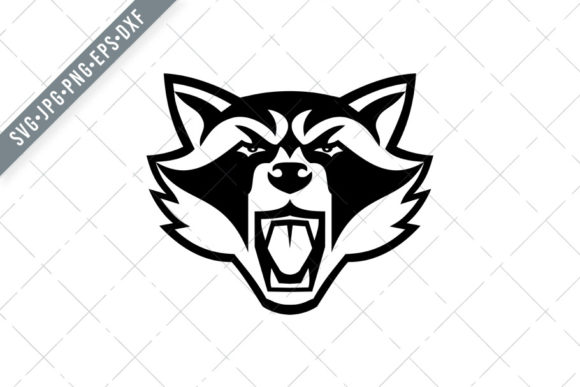
The head of an angry North American raccoon is a graphic representation of a medium-sized mammal native to North America, depicted from a front view on an isolated background. The style is deliberately retro and monochrome, using bold lines and high contrast to convey a sense of aggression, determination, or attitude. Unlike a generic raccoon clip art, this design emphasizes the animal's facial features—narrowed eyes, bared teeth, raised fur—to create a distinct emotional tone. The artwork is typically delivered as a set of vector and raster files, including SVG, PNG, DXF, EPS, and JPG, making it adaptable to a wide range of applications.
What sets this illustration apart is its combination of wildlife accuracy with a stylized, almost cartoonish anger. The raccoon is recognizable as a real North American raccoon (often called the northern raccoon), but the exaggerated expression and retro linework give it a character-like quality. This makes it suitable for projects that need a touch of wild personality without veering into full cartoon territory.
Comparing the Angry Raccoon Mascot to Other Animal Mascot Styles
Animal mascot illustrations are a staple in design, but they vary widely in tone, complexity, and application. The head of an angry North American raccoon sits in a specific niche: it is neither a cute, friendly mascot nor a hyper-realistic wildlife portrait. It occupies a middle ground where attitude and style take precedence. Compared to a smiling raccoon or a neutral wildlife photograph, this angry mascot offers a clear emotional hook. It can communicate toughness, defiance, or a playful sense of menace, depending on the context.
In contrast to more detailed, full-body mascots, the front-facing head format is simpler and more focused. This makes it easier to use in smaller spaces, such as stickers or badges, without losing impact. Full-body illustrations often require more scaling and positioning, whereas a centered head design works well as a button, a patch, or a shirt front graphic. The isolated background also simplifies cropping and layering.
When compared to color illustrations, the black-and-white retro style offers specific advantages. It prints cleanly on a variety of materials, works well with both light and dark backgrounds when inverted, and aligns with vintage or rustic design trends. However, if your project requires vibrant color or a softer, friendlier look, this angry raccoon may not be the best fit. A colorful, friendly raccoon mascot might serve better for a children's event or a lighthearted brand.
File Formats and Their Practical Implications
One of the key practical considerations when choosing a mascot illustration is the range of file formats provided. The head of an angry North American raccoon set typically includes SVG, PNG, DXF, EPS, and JPG files. Each format serves a different purpose, and understanding the differences can save you time and frustration.
- SVG (Scalable Vector Graphics): This is the most versatile format for cutting machines like Silhouette Cameo or Cricut. SVGs are resolution-independent, meaning you can resize the design without losing quality. They also allow for easy color changes and layer separation. If you plan to create vinyl decals, stencils, or iron-on transfers, SVG is essential.
- PNG (Portable Network Graphics): A 300 DPI PNG file at least 10 inches in size is ideal for digital use and printing. Because it has a transparent background, you can place the raccoon head on any colored surface without white box outlines. This is useful for social media graphics, web banners, or online store listings.
- DXF (Drawing Exchange Format): Often used in CAD and certain cutting software, DXF files provide another vector option for crafters who work with specific programs. Not all cutting machines support SVG natively, so DXF serves as a backup vector format for compatibility.
- EPS (Encapsulated PostScript): EPS files are widely used in professional design software like Adobe Illustrator and CorelDRAW. If you are a graphic designer who needs to further edit the illustration—such as adjusting lines, adding effects, or combining with other elements—EPS gives you the flexibility to do so.
- JPG (Joint Photographic Experts Group): This raster format is useful for quick previews or for use in applications that do not support transparency. However, JPG files have a solid background and may not be the best choice for layered designs or professional printing without further editing.
Having access to all five file types means you can move seamlessly between different tools and workflows. For instance, you might use the SVG for cutting vinyl, the PNG for a website banner, and the EPS for a large-format poster. This breadth of formats reduces the need to convert files yourself, which can sometimes result in quality loss or alignment issues.
Strengths and Tradeoffs of the Angry Raccoon Mascot
Every design option has its strengths and limitations. The head of an angry North American raccoon excels in several areas, but it is not the right choice for every project.
Strengths
- Immediate visual impact: The angry expression grabs attention and conveys a strong emotion. This can be effective for brands or projects that want to project confidence, rebellion, or a rugged outdoor aesthetic.
- Retro appeal: The black-and-white style with bold lines evokes a vintage or traditional look that feels timeless. It works well for rustic, Americana, or grunge designs.
- Versatility across media: Because it is delivered in multiple vector and raster formats, you can use it on T-shirts, mugs, stencils, wall art, greeting cards, banners, scrapbooking layouts, party invitations, covers, accessories, and more. The isolated background makes it easy to incorporate into existing designs.
- Scalability: Vector files ensure that the illustration remains sharp whether it is printed on a small sticker or a large banner.
Tradeoffs and Limitations
- Niche emotional tone: The angry expression may not suit brands or events that require a welcoming, cheerful, or neutral tone. If you are designing for a children's birthday party or a customer service focused business, a friendlier mascot might be more appropriate.
- Monochrome limitation: While the black-and-white style is part of the charm, it limits your color options unless you recolor the SVG. If your project relies heavily on a specific color palette, you will need to manually adjust the design.
- Subject specificity: The raccoon is a North American animal, so its cultural associations are region-specific. In some contexts, raccoons are seen as pests or tricksters, which might not align with your intended message. A more neutral or universally admired animal could be a safer choice for some audiences.
- Head-only format: If you need a full-body illustration for a mascot costume, animation, or larger composition, the head-only format may feel incomplete. In that case, a full-body mascot vector set would be more suitable.
Best-Fit Situations for the Angry Raccoon Mascot
Based on its strengths, the head of an angry North American raccoon is most effective in projects where you want to convey a strong, independent, or slightly edgy personality. Here are a few realistic examples:
- Outdoor or adventure brand merchandise: A T-shirt or hat featuring the angry raccoon can appeal to hikers, campers, or wildlife enthusiasts who appreciate a rugged aesthetic. The retro style fits well with vintage outdoor gear or national park inspired designs.
- Sports team or club mascot: If your team needs a fierce mascot that suggests tenacity, the angry raccoon works as a badge, patch, or flag design. The front-facing composition works well on jerseys or caps.
- Party or event branding: For a themed party—such as a wilderness, camping, or "critter" theme—the raccoon head can be used on invitations, banners, and cupcake toppers. The angry expression adds a playful edge rather than a literal threat.
- Stencils and wall art: The bold lines and high contrast make this illustration ideal for stenciling onto wood, canvas, or walls. You can create rustic home decor or signage for a cabin, garage, or man cave.
- Accessories and small items: Use the designs for keychains, patches, pins, or phone cases. The isolated head format works well in small spaces without losing readability.
When to Consider Alternatives
Despite its versatility, the angry raccoon mascot is not the universal solution. If your project demands a softer, more approachable image, you might consider a neutral or smiling raccoon illustration, or even a different animal altogether. For corporate or professional branding, an animal mascot with a more composed expression may convey reliability better than one that looks aggressive.
Additionally, if your production process involves exact color matching or requires the design to blend seamlessly with a complex background, the black-and-white nature of this set could require extra editing work. In that case, a full-color vector illustration with layered elements might save time.
Cost is another factor. While the set of files is reasonably priced for the range of formats and the quality of the design, free clip art or simpler icons may suffice for one-off or low-stakes projects. If you are producing professional merchandise or branding, investing in a well-crafted vector set like this one is typically worthwhile because it ensures clean output and format flexibility.
Making an Informed Decision
When evaluating whether the head of an angry North American raccoon is right for your next project, start by considering the emotional tone you want to communicate. Angry, bold, and retro can be powerful associations, but they should align with your audience's expectations and your overall message. Next, review the file formats you need. If you use a cutting machine, prioritize SVG or DXF compatibility. If you work primarily in raster software, the high-resolution PNG will be your go-to. For professional design work, EPS provides the most editing freedom.
Also think about scale. Because the illustration is provided at a large size (at least 10 inches), you can start with a high-quality base and scale down as needed without worrying about pixelation. This is especially important if you plan to print at different sizes across various products.
Finally, consider how the raccoon mascot fits within a broader design system. If you are building a cohesive brand or event theme, the anger and retro style should be consistent across all visual elements. A single angry raccoon on a T-shirt or invitation can be a striking accent, but if the rest of your design uses pastel colors and soft fonts, the contrast may feel jarring rather than intentional.
By weighing these factors, you can determine whether this particular mascot illustration is the right tool for your creative goals. The combination of format flexibility, bold style, and clear emotional expression makes the head of an angry North American raccoon a strong contender for many projects, but as with any design asset, its value depends on how well it matches your specific needs.