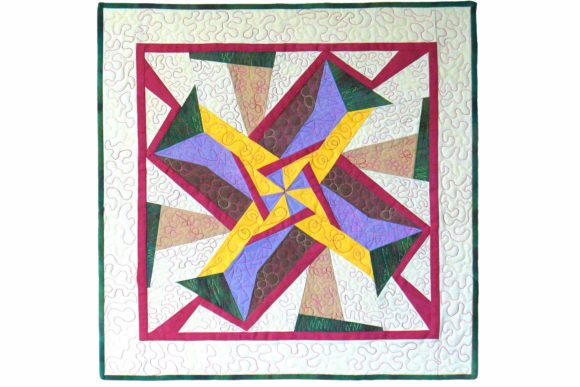
Humdinger Designer Pinwheel Patchwork Quilt Pattern
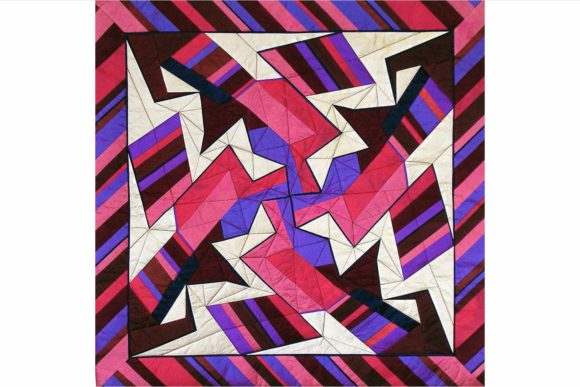
Some quilt patterns feel familiar the moment you see them, but Humdinger Designer Pinwheel Patchwork Quilt Pattern pulls you in for a second look. It is one of those rare designs that balances geometry with warmth, structure with playfulness. Built on a four-fold rotation of a tessellated right triangle, this pinwheel pattern finishes at 21″ x 21″ — a size that works equally well as a wall hanging, a table topper, or the centerpiece of a larger quilt project. The magic, however, lies in how you choose your colors. With thoughtful fabric selection, this pattern becomes vibrant, energetic, and deeply personal.
If you have ever admired the crisp movement of a pinwheel but wanted something with more visual complexity, Humdinger delivers. It does not rely on fussy cutting or intricate piecing to impress. Instead, it lets the interplay of repeated triangles and negative space do the heavy lifting. Whether you are a seasoned quilter or someone who has been sewing for a few years, this pattern offers a satisfying blend of simplicity and sophistication.
A Design That Moves
At first glance, the Humdinger pinwheel appears to spin across the fabric. That sense of motion comes directly from the tessellated triangle repeated four times around a center point. Each triangle shares a border with the next, creating a seamless rotation that feels both mathematical and organic. The result is a quilt top that draws the eye inward and outward at the same time.
The pattern calls for one large 22″ fat quarter for the top background, plus various scraps for the patchwork. That scrap-friendly nature makes it an excellent choice for stash-busting or for showcasing a curated palette of fabrics you already love. Because the design relies on contrast between the background and the triangles, even subtle shifts in hue or value can change the entire mood of the finished piece.
Visually, Humdinger reads as bold but not overwhelming. The pinwheel motif is classic, but the tessellation adds a layer of depth that keeps it from feeling dated. It works beautifully in modern, minimalist spaces as well as in more traditional or eclectic settings. The 21-inch square format also means you can complete the top relatively quickly, which is a welcome change for anyone who has spent months on a single large bed quilt.
Where Humdinger Shines in Creative Projects
While this pattern is obviously a quilt design, its applications go beyond the bed or the wall. For designers and creative entrepreneurs, the Humdinger pinwheel can serve as inspiration for branding elements, textile patterns, or even logo motifs. The four-fold rotation and tessellated structure mirror the kind of geometric branding that feels both timeless and modern.
- Home décor samples: A finished Humdinger block makes an instant cushion cover, mini wall quilt, or table centrepiece. Its square format is easy to photograph and style for portfolio or social media content.
- Pattern libraries and design assets: If you create design resources for crafters or quilters, Humdinger-style geometry can be adapted into digital pattern files, embroidery motifs, or print-on-demand fabric designs.
- Small business branding: The pinwheel shape communicates energy, growth, and craftsmanship. For a quilting business, a fabric shop, or a handmade goods brand, this motif could become a recognizable visual signature.
- Editorial and publishing projects: Quilt patterns like Humdinger are frequently featured in craft magazines, ebooks, and online tutorials. The clean geometry photographs well and gives editors a strong visual anchor.
The pattern also works well for collaborative projects, such as quilt-alongs or skill-building workshops. Because the piecing is not difficult but still yields a striking result, it appeals to a range of skill levels. Participants can choose different color schemes and compare how the same tessellation reads in high contrast versus analogous palettes.
Color Choices and Visual Hierarchy
One of the most enjoyable aspects of working with the Humdinger pattern is the freedom it gives you to experiment with color. The pinwheel structure naturally creates a focal point at the centre, but the tessellated triangles extend that focus outward. How you handle value, saturation, and temperature will determine whether the finished piece feels calm, energetic, bold, or subtle.
For a vibrant and fun look, consider using a deep or neutral background and bright, saturated triangles. The contrast will make the pinwheel pop and give the pattern a contemporary feel. If you prefer something softer, try a light background with pastel or low-volume prints. The geometry still reads clearly, but the overall effect becomes more serene.
Visual hierarchy in a quilt like this is largely driven by colour placement. Because each triangle is identical in shape, the eye relies on colour differences to create movement and emphasis. You can place the most saturated fabrics at the tips of the pinwheel to draw attention outward, or concentrate bright colours near the centre to create a radial burst. The same pattern can look completely different depending on whether you use solids, prints, or a mix of both.
If you are designing for a client or a specific space, the Humdinger pattern adapts well to brand colour palettes. A quilt made in a company’s signature colours could serve as a unique office or retail installation. For bloggers and content creators, a Humdinger quilt in your own curated palette reinforces a consistent visual identity across your photography and video backgrounds.
Practical Guidance for Choosing and Using This Pattern
Before you cut into your fabric, take a moment to consider how the pattern will fit your specific project and skill set. The instructions call for piecing one tessellated triangle, including border widths, and then repeating that patch four times to complete the quilt top. This modular approach makes it easy to check your work as you go.
Here are a few practical recommendations based on real-world use:
- Evaluate your fabric choices: Lay out your background and scrap fabrics together before cutting. Look at them in natural light and under artificial light to ensure the contrast works in both settings. If the triangles blend into the background too much, the pinwheel effect will be lost.
- Test a single block first: Cut and piece one tessellated triangle before committing to the full set of four. This gives you a chance to check your seam allowances, pressing techniques, and colour balance. It is much easier to adjust one block than to unpick an entire quilt top.
- Consider appliqué skills: The pattern notes that appliqué skills may help. If you are comfortable with raw-edge or turned-edge appliqué, you can add extra detail or contrast elements to the centre of the pinwheel. Even a simple circle appliqué at the hub can anchor the design and hide intersecting seams.
- Mind the seam allowances: The pattern requires you to add seam allowances to all patches and borders. Mark your cutting lines clearly, and use a consistent seam allowance throughout. Accuracy in the triangles is especially important because any variation will compound across the four repeats.
- Choose your quilting approach: Once the top is assembled, you can quilt it as you prefer. A dense quilting pattern in the background can make the pinwheel pop, while minimal quilting keeps the focus on the fabric itself. Walking foot quilting, free-motion, or even hand quilting all work well.
For those who want to print the pattern, use Adobe Acrobat Reader set to Poster at 100% scale. This ensures your printed pieces match the intended dimensions and that your tessellation fits together correctly.
Why Humdinger Belongs in Your Design Repertoire
Whether you are a quilter, a designer, or a creative entrepreneur, the Humdinger Designer Pinwheel Patchwork Quilt Pattern offers more than just a sewing project. It is a study in geometric repetition, colour theory, and modular construction — principles that apply across many creative disciplines. The finished piece can serve as a portfolio sample, a gift, a prop for photography, or a product prototype.
The pattern’s manageable size and straightforward piecing make it accessible, but the design possibilities are deep enough to reward repeated exploration. Change the colour scheme, vary the fabric types, or adapt the scale, and you get an entirely new piece. That versatility is rare in a single pattern.
For small business owners, especially those in the handmade or design space, a well-executed Humdinger quilt communicates attention to detail, a strong sense of composition, and a respect for traditional craft techniques reinterpreted in a modern way. It is the kind of work that photographs well, tells a story, and invites conversation.
If you are looking to expand your sewing skills, build your design portfolio, or simply create something vibrant and fun in a weekend, this pattern deserves a place on your cutting table. And once you see how the tessellated triangles spin into a finished pinwheel, you will understand why it earned the name Humdinger.
For those who want to go further, I have published several patchwork quilt design ebooks that include tutorials for advanced sewing skills. These are available through all major online booksellers and cover techniques that build directly on the foundation of patterns like this one. Whether you are new to tessellated designs or looking to refine your craft, there is always something new to discover in the interplay of shape, colour, and fabric.