The Art of Winter Mountain Pine Trees Frames: Design, Detail, and Digital Utility
Winter landscapes hold a timeless appeal. The combination of snow-capped mountains, evergreen pine trees, and the framing device itself creates a visual shorthand for tranquility, resilience, and natural beauty. Winter Mountain Pine Trees Frames offer more than just a border; they provide a complete atmospheric context that can transform a simple image into a story. For designers, content creators, and business owners, understanding how to leverage these assets effectively can elevate projects from ordinary to memorable.
The Winter Mountains and Pine Trees frame is a particularly versatile illustration style because it bridges the gap between detailed natural scenery and functional graphic design. Unlike abstract patterns or purely typographic frames, this motif carries immediate emotional weight. It evokes crisp air, quiet snowfalls, and the sturdy silhouette of pines standing against a mountain backdrop. For nature lovers and professionals alike, this imagery resonates on a personal level while maintaining broad commercial applicability.
From Digital Asset to Creative Centerpiece
At its core, a frame is a tool for focus. But when the frame itself contains rich illustration, it becomes a dual-purpose element. A Winter Mountain Pine Trees Frame simultaneously borders your content and delivers a thematic experience. This dual function is what makes it so valuable across different media. The key lies in the quality of the asset: high-resolution, transparent-background files allow you to drop the frame into any project without fighting with backgrounds or losing detail.
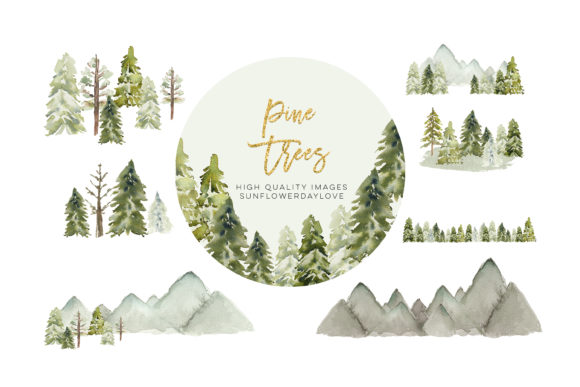
When you work with a set of 17 individual high-quality images, each with a transparent PNG background at 300 dpi, you gain the ability to compose scenes rather than just place borders. You can layer different elements, adjust opacity, combine multiple frames, or use individual pine trees and mountain silhouettes as stand-alone graphics. This flexibility turns a simple frame set into a mini design library.
Technical Precision for Professional Workflows
Professionals in print and digital design rely on specific technical standards. The 300 dpi resolution of these files ensures that every needle on the pine trees and every ridge on the mountains remains sharp, whether used on a business card or a large poster. The PNG format with transparency is critical for workflows that involve non-white backgrounds, textured paper, or layered compositions in software like Photoshop, Illustrator, Procreate, or Affinity Designer.
Without watermarks, the assets are production-ready from the moment of download. This eliminates the tedious step of cleaning up sample marks or re-creating transparency. For educators creating classroom materials, researchers preparing conference posters, or hobbyists building scrapbook pages, this immediacy saves hours. The absence of watermarks also means that the frames integrate seamlessly into merchandise designs, where any extraneous marks would ruin the final product.
Versatile Applications Across Media and Merchandise
The practical range of Winter Mountain Pine Trees Frames extends far beyond typical borders. Consider the following real-world applications where these illustrations shine:
- Art prints and book covers: A frame that echoes the theme of the content reinforces the mood. For a winter-themed novel or a nature photography print, the frame becomes part of the artwork itself.
- Logos and branding: Many outdoor brands, ski resorts, and eco-conscious businesses incorporate mountain and pine motifs into their identity. A set of frames provides ready-made graphic elements for logos, letterheads, and packaging.
- Stationery and invitations: Wedding invitations set in a mountain lodge, holiday cards, or winter party invites benefit from the cohesive aesthetic. The frames add a hand-drawn, elegant feel without requiring custom illustration.
- Merchandise and packaging: T-shirts, mugs, tote bags, and gift boxes can feature the frame as a central design or a subtle repeating pattern. The transparent background means the design works on any product color.
- Scrapbooking and planner goodies: Hobbyists love the flexibility of layering frames with photos, stickers, and journaling. The 300 dpi clarity ensures that even small-scale prints remain crisp.
- Website and social media banners: A well-composed frame can anchor a hero image, create a consistent brand header across platforms, or frame profile photos with seasonal flair.
- Patterns for paper or fabric: By repeating or rotating individual elements from the set, designers can create custom patterns for wrapping paper, fabric rolls, or digital backgrounds.
Design Considerations for Different Use Cases
Working effectively with Winter Mountain Pine Trees Frames requires a thoughtful approach to composition, scale, and color interaction. While the assets are ready to use, how you deploy them determines the success of your project.
Scaling and Composition Flexibility
Because the files are high resolution, you can scale them up for posters or down for icons without losing quality. However, consider the visual weight of the frame relative to your content. A heavy pine forest frame might overwhelm a small invitation but look stunning on a large banner. Many designers find that using a lighter touch—perhaps just the mountain silhouette at the top and a few pines at the bottom—creates a more elegant result. With 17 images in the set, you have the freedom to mix and match elements to achieve the exact balance you need.
Color Palette and Mood Alignment
The winter mountain and pine tree motif typically uses cool blues, whites, deep greens, and silvery grays. When integrating the frame into a project, ensure that your other design elements harmonize with this palette. A warm-toned photograph or neon text might clash. On the other hand, monochrome or analogous color schemes will feel cohesive. For merchandise like mugs or T-shirts, the natural contrast of dark green pines against a white background often works best, but a subtle inversion can create striking results.
Layering and Transparency in Complex Projects
The transparent PNG format is a superpower for layered compositions. You can place a Winter Mountains and Pine Trees frame over a gradient background, a textured paper scan, or a photograph of a snowy landscape. Try placing the frame on its own layer with a blending mode like Multiply or Overlay for a more integrated look. For book covers or packaging, consider using the frame as a mask or clipping path to reveal parts of an underlying image. The individual elements from the set can also be scattered across a layout to create depth, with some in sharp focus and others blurred or faded.
The Role of 300 DPI and PNG Transparency in Production
Print professionals know that resolution matters. A 72 dpi image might look acceptable on screen but will appear pixelated when printed. The 300 dpi standard ensures that every detail of the pine needles and mountain contours is rendered smoothly in print. This is especially important for merchandise, where customers expect crisp, professional results on physical products.
Transparency in PNG format also allows for direct placement into print templates without additional masking. For example, if you are designing a greeting card in a desktop publishing app, you can import the Winter Mountain Pine Trees Frame and position it exactly where needed. The transparent areas will allow the card background to show through naturally. This workflow reduces file size compared to layered PSD files and maintains compatibility across virtually all design software.
Integrating Winter Mountain Pine Trees Frames into Brand and Product Design
For business owners and brand managers, consistency is paramount. Using a unified set of frame illustrations across packaging, social media, and stationery creates a cohesive brand identity. The winter mountain and pine tree motif works particularly well for brands that emphasize nature, adventure, sustainability, or seasonal products. A coffee brand that sources beans from mountain regions, a skincare line using pine needle extract, or an outdoor apparel company all can benefit from this visual language.
Consider also the educational and research sector. Teachers creating unit studies on forest ecosystems, winter geography, or climate zones can use the frames to unify their worksheets, bulletin boards, and digital presentations. The visual appeal holds student attention while providing a consistent aesthetic. Researchers presenting findings at conferences can use the frames to make poster presentations more approachable without sacrificing professionalism.
Hobbyists and creators working on personal projects often have the most fun with these assets. Scrapbook layouts that tell a story of a winter hike, planner spreads that track the snowy months, or handmade cards for the holiday season all benefit from the authentic, high-quality illustration style. The fact that the frames come without watermarks and at a professional resolution means that the final product looks like it was custom-designed, regardless of the creator's skill level.
Ultimately, the value of Winter Mountain Pine Trees Frames lies in their ability to serve multiple masters: the professional needing production-ready assets, the creative seeking inspiration, the business owner building a brand, and the educator making learning materials more engaging. The combination of technical quality, thematic richness, and sheer versatility makes this set a practical investment for anyone who works with visual content. By understanding how to scale, layer, and color-match these frames, you can unlock their full potential across print, digital, and merchandise applications.