Watercolor Cute Animals Clipart for Creative Projects
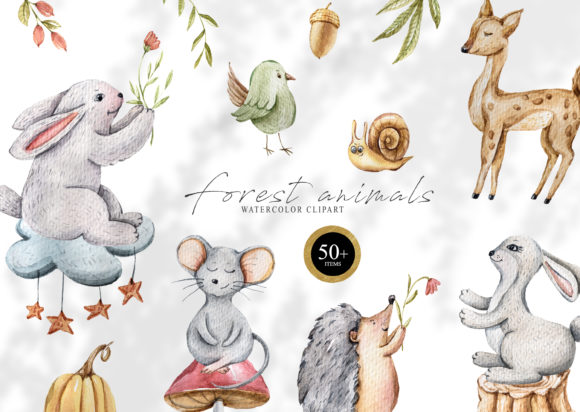
If you have ever spent hours trying to find the perfect illustration for a birthday invitation or a baby shower template, you know how frustrating it can be when the artwork feels flat, generic, or just not quite right. That is where hand-painted watercolor clipart steps in, offering a warmth and organic texture that digital vectors often lack. The Watercolor Cute Animals Clipart collection, featuring forest favorites like mouse, rabbit, hedgehog, deer, and bird, brings a gentle, storybook charm to any project. Whether you are a seasoned graphic designer or a hobbyist creating something special for a loved one, this set gives you the flexibility to craft polished visuals without needing to paint each element yourself.
What Makes Hand-Painted Watercolor Clipart Stand Out
Unlike flat icons or heavily stylized vectors, watercolor clipart carries subtle variations in tone, edge softness, and paper texture that mimic real brushwork. Each animal in this collection—the curious mouse, the alert rabbit, the spiny hedgehog, the graceful deer, and the delicate bird—has been individually painted, meaning no two brush strokes are identical. This authenticity translates directly into your designs, making them feel less manufactured and more personal.
The set includes 50 individual clipart elements, all saved at 300 dpi as PNG files with transparent backgrounds. Sizes range from 700 to 2200 pixels, which gives you plenty of resolution for both digital screens and print. Because the backgrounds are already removed, you can drop these animals into any layout without tedious masking or cutting out. That alone can save you a significant amount of time, especially if you are working on multiple projects or tight deadlines.
Key Characteristics of This Forest Animal Collection
- Resolution and clarity: At 300 dpi and up to 2200 px, these files remain crisp even when scaled for posters or large-format prints.
- Transparent PNG format: No white boxes or messy edges. Each animal sits on a clean, see-through background that layers perfectly over colors, patterns, or photos.
- Hand-painted authenticity: Real watercolor texture means subtle granulation, soft edges, and natural color blending that flat digital art cannot replicate.
- Variety of species: Five distinct forest animals give you a cohesive woodland theme without forcing you to mix different art styles from separate sets.
- Scale flexibility: The size range (700–2200 px) allows you to use the same elements for small stickers or full-page posters without resolution loss.
Practical Applications Across Personal and Professional Projects
The beauty of a well-made watercolor clipart set is that it works in almost any context where you want a soft, natural, or whimsical feel. Below are some of the most effective ways to use these forest animal illustrations, along with real-world examples that show how each application adds value.
Birthday Invitations and Baby Showers
Imagine designing a woodland-themed first birthday invitation. You place a sleepy hedgehog beside the text, add a few small mushrooms from another part of the set, and layer everything over a soft cream background. The watercolor texture gives the invite a handmade, keepsake quality that parents often love to save. For baby showers, a mother rabbit with a tiny bird perched nearby can symbolize gentleness and new beginnings. Because the clipart is already high-resolution and transparent, you can adjust sizes, rotate elements, and combine them freely in Canva, Photoshop, or even Microsoft Word without quality loss.
Social Media Templates and Patterns
Social media feeds benefit from consistent yet varied visuals. You can create a set of Instagram story templates featuring each animal in turn, using your brand colors behind the transparent PNGs. For pattern design, arrange several animals in a repeating tile to create wrapping paper, fabric patterns, or digital backgrounds. The watercolor style prevents patterns from looking too rigid or mechanical, which is a common problem with perfectly symmetrical vector repeats.
Greeting Cards and Posters
A greeting card featuring a deer standing among soft foliage, or a bird perched on a branch, carries an emotional weight that cartoonish clipart often misses. Because these animals are painted rather than drawn in hard outlines, they blend beautifully with handwritten typography or calligraphy. For posters, you can print the deer at full size (2200 px) and it will retain its soft edges and gradient washes even at A3 or A4 dimensions.
Print-on-Demand Products
If you sell on platforms like Printful, Redbubble, or Zazzle, having unique, hand-painted artwork is a strong differentiator. You can apply these animal illustrations to baby clothes, bed linen, mugs, textile totes, and nursery decor. A simple design—say, a sleeping rabbit on a onesie or a hedgehog on a ceramic mug—becomes marketable because the watercolor style suggests craftsmanship. The transparent background also makes it straightforward to mock up products without needing complex clipping masks.
Scrapbooking and Paper Crafts
For educators and hobbyists who create physical albums or classroom materials, these clipart pieces work wonderfully when printed on matte paper. You can cut them out and layer them with other paper embellishments. The watercolor look integrates naturally with patterned scrapbook papers and handwritten journaling.
Usability, Efficiency, and Branding Benefits
When you choose a well-prepared clipart set, you are not just buying pretty images—you are investing in workflow efficiency. Let me break down the specific benefits that matter most for creators and professionals.
Time Savings and Reduced Friction
Every hour you spend editing backgrounds, fixing edges, or hunting for cohesive styles is time you cannot spend on client work or creative exploration. With these pre-cut transparent PNGs, you drag and drop the animal directly onto your canvas. The 300 dpi resolution also means you do not have to upscale or resample for most print jobs, which eliminates a common source of frustration. For a freelancer juggling multiple projects, this kind of readiness is invaluable.
Visual Consistency and Brand Identity
If you run a business that uses woodland or nature motifs—a daycare, a children's book blog, an organic baby product shop, or a stationery brand—consistent art style is essential. Using clipart from a single hand-painted set ensures that every animal shares the same lighting, texture, and color palette. That coherence strengthens brand recognition and makes your materials look intentional rather than pieced together from random sources.
Engagement and Emotional Connection
Watercolor art tends to evoke warmth, nostalgia, and a sense of handmade care. When customers see a soft, painted deer on a greeting card or a gift tag, they often perceive the product as higher quality or more thoughtful. This emotional response can translate into higher engagement on social media posts, stronger click-through rates on email campaigns, and increased willingness to pay a premium for printed goods.
Practical Considerations When Choosing Watercolor Clipart
Not all clipart sets deliver the same experience. Based on my work with dozens of collections, here are the factors you should evaluate before committing to one.
- Check the resolution at intended use size. If you plan to print on large posters or fabric, make sure the individual elements scale to at least 10–12 inches at 300 dpi. The 2200 px max in this set covers roughly 7.3 inches at 300 dpi, which is ideal for cards, invitations, apparel, and standard nursery art.
- Examine the transparency edges. Good watercolor clipart should have soft, feathered edges where the paint meets the background. Harsh cut lines or visible halos indicate poor masking. If the set includes preview images, zoom in to check the edge quality.
- Consider the color palette. Forest animal sets often use muted greens, browns, warm grays, and gentle pastels. Make sure these colors complement your brand or project palette without clashing. You can always adjust hue and saturation in your editing software, but starting close to your target saves time.
- Think about composition flexibility. A set with animals in different poses—sitting, standing, looking left or right—gives you more layout options. This collection includes a mix of poses that work well in circular frames, horizontal banners, or vertical card designs.
- File organization matters. Look for sets that name files clearly (e.g., rabbit_sitting.png, deer_standing.png) rather than random numbers. Good organization speeds up your workflow when you need to find a specific element quickly.
Integrating Clipart into Your Workflow
Once you have the files, organizing them in a logical folder structure on your computer or cloud storage will save you repeated searches. For frequent users, creating a dedicated asset library in software like Canva, Affinity Designer, or Photoshop allows you to access the animals directly from a panel rather than digging through folders. You can also group them by type—mice, rabbits, hedgehogs, deer, birds—or by mood (sleeping, alert, foraging).
If you produce patterns, consider scanning or photographing your own textured backgrounds (watercolor paper, linen, wood grain) and layering the transparent animals over them. This creates a rich, dimensional look that stands out on products like fabric totes or bedding. The fact that these are genuine watercolor paintings means they will interact naturally with those textures, unlike flat vectors that might sit awkwardly on top.
A Few Observations From Real-World Use
I have seen these forest animal illustrations used in both commercial and personal contexts, and a few patterns stand out. First, the hedgehog tends to be the most popular for baby-related designs—something about its rounded shape and gentle expression appeals to new parents. Second, the deer works exceptionally well on larger formats like posters or wall art because its longer proportions fill space gracefully. Third, the mouse and bird are excellent for filler or accent elements; they can be scaled down to fit into corners, alongside text, or as part of a border without overwhelming the main subject.
One recommendation I often give is to combine the animals with hand-lettered quotes or simple sans-serif typography for a balanced look. Watercolor art can feel very organic, and pairing it with a clean font prevents the design from becoming too busy. For example, a deer silhouette over a soft wash background paired with a minimal serif font for "Welcome Baby" creates a modern, elegant announcement.
Another practical tip: because these are individual files, you can recolour them subtly in Photoshop or GIMP using adjustment layers. Raising the warmth or shifting the hue slightly can help the animals match a specific brand palette. Just be mindful that heavy overpainting or excessive sharpening can ruin the watercolor feel, so work in gentle increments.
Final Thoughts on Choosing the Right Set
The Watercolor Cute Animals Clipart collection offers a genuine hand-painted aesthetic, high resolution, and a cohesive woodland theme that suits a wide range of projects. Whether you are designing a birthday invitation, building social media templates, creating patterns for textiles, or preparing print-on-demand merchandise, having 50 ready-to-use, transparent PNGs at your disposal removes a significant barrier to professional-quality results. The key is to treat these elements as building blocks rather than finished pieces—combine them, layer them, resize them, and let their natural watercolor texture do the heavy lifting. Used thoughtfully, they can elevate a simple layout into something that feels curated, warm, and distinctly handmade.